
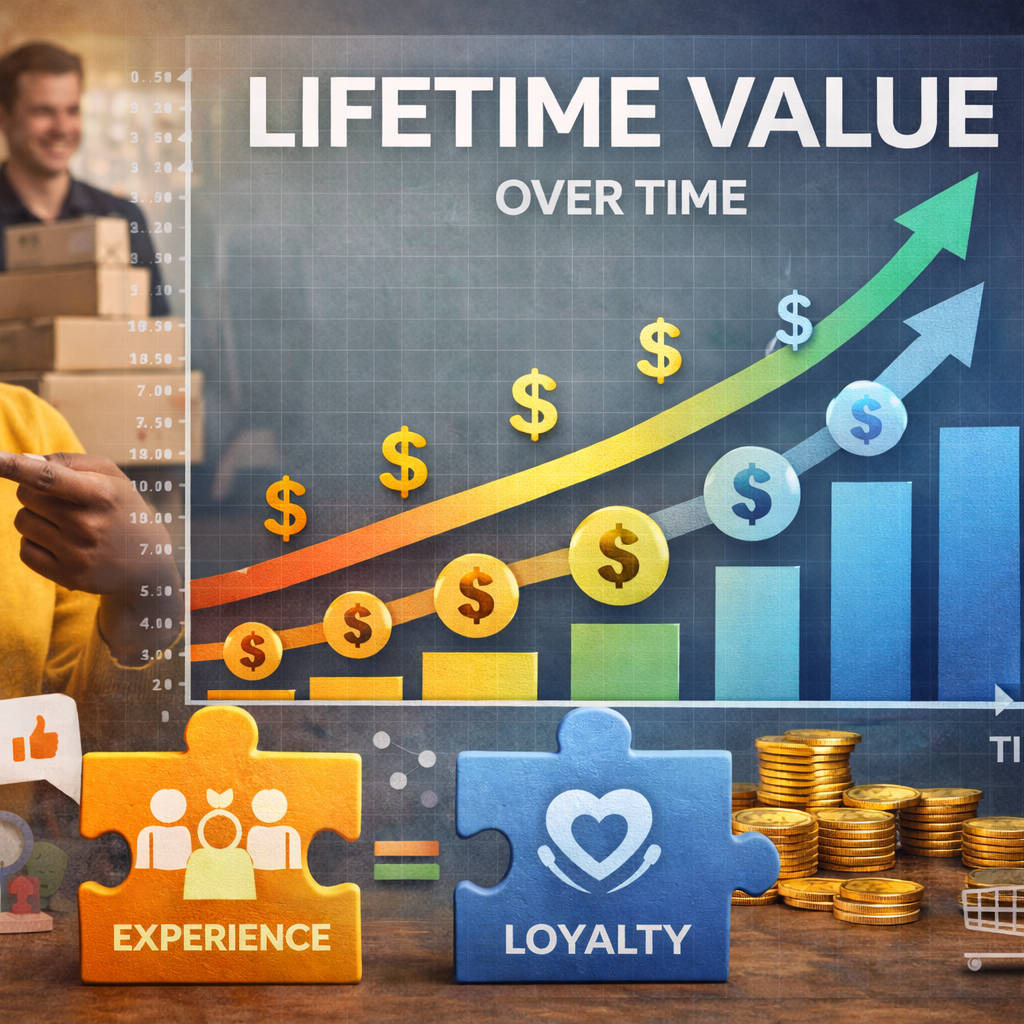
How Customer Experience and Loyalty Shape Lifetime Value Over Time
Key Takeaways
-
You increase lifetime value when you improve customer experience and build loyalty across every interaction, not just at the point of sale.
-
You strengthen long-term revenue when your systems align customer experience, retention strategy, and trust signals.
The Relationship Between Customer Experience And Lifetime Value
Customer experience and lifetime value are closely linked. When you improve how customers interact with your brand, you extend their relationship with you. This leads to higher retention, more repeat engagement, and stronger revenue over time.
Customer lifetime value reflects how much a customer contributes over the full relationship. This value grows when customers stay longer, buy more often, and trust your brand. You influence all three through customer experience and loyalty.
You need to view customer experience as a continuous process. It is not a single touchpoint. It includes discovery, onboarding, usage, support, and long-term engagement. Each stage shapes how customers perceive your brand.
How Customer Experience Shapes Customer Loyalty
Customer loyalty is built through consistent and reliable experiences. When customers feel understood and supported, they return. Loyalty does not come from one strong interaction. It comes from repeated positive outcomes.
What Makes Customers Stay Loyal?
You create loyalty when your experience meets or exceeds expectations in simple ways:
-
Clear communication at every stage
-
Fast and reliable support
-
Consistent product or service quality
-
Transparent processes and policies
-
Easy navigation and accessibility
When these elements work together, customers develop confidence in your brand. That confidence turns into long-term loyalty.
Why Does Customer Experience Influence Retention?
Retention depends on how easy and valuable your experience feels. If customers face friction, confusion, or delays, they leave. If your experience feels smooth and helpful, they stay.
You should focus on removing friction across the journey. This includes simplifying onboarding, reducing effort in support, and ensuring clarity in communication. These actions directly improve retention and customer lifetime value.
How Loyalty Drives Customer Lifetime Value Over Time
Customer loyalty directly impacts customer lifetime value. Loyal customers engage more often and stay connected for longer periods.
How Does Loyalty Increase Revenue Over Time?
Loyal customers contribute to growth in several ways:
-
They return for repeat purchases or usage
-
They are more likely to explore additional offerings
-
They show higher tolerance during minor service issues
-
They are more receptive to communication and updates
This behavior increases the total value each customer brings over time.
Why Do Loyal Customers Reduce Acquisition Pressure?
When loyalty is strong, you rely less on acquiring new customers to maintain growth. You build revenue from existing relationships instead of constantly replacing lost customers.
This reduces pressure on acquisition strategies and allows you to allocate resources more efficiently.
Mapping Customer Experience To Key Touchpoints
To improve lifetime value, you need to understand where customer experience matters most. This requires mapping the full journey and identifying critical touchpoints.
Which Touchpoints Shape Customer Perception?
You should evaluate each stage of the journey:
-
First interaction with your brand
-
Onboarding or initial setup
-
Product or service usage
-
Customer support interactions
-
Ongoing communication and engagement
Each touchpoint affects how customers feel about your brand. Weak points reduce loyalty. Strong points reinforce it.
How Can You Improve Touchpoint Consistency?
Consistency builds trust. You can improve consistency by:
-
Aligning messaging across teams
-
Standardizing service quality
-
Using shared data systems
-
Training teams on customer expectations
When customers experience consistency, they feel more confident in your brand. This strengthens loyalty and increases lifetime value.
Aligning Customer Experience With Business Strategy
Customer experience should not operate in isolation. It needs to align with your broader business strategy. This alignment ensures that every effort supports long-term growth.
Why Should Customer Experience Be Cross-Functional?
Customer experience spans multiple teams. Marketing, sales, product, and support all contribute to how customers interact with your brand.
You should create alignment across these teams by:
-
Sharing customer data and insights
-
Defining common goals around retention and loyalty
-
Coordinating communication strategies
-
Ensuring consistent brand positioning
When teams work together, you deliver a unified experience that supports lifetime value growth.
How Do Internal Systems Affect Customer Experience?
Your internal systems shape how efficiently you deliver experiences. Poor systems create delays, errors, and inconsistency.
You should focus on:
-
Integrated data platforms
-
Clear workflows and processes
-
Real-time access to customer information
-
Scalable support systems
Strong systems enable better customer experience and support long-term loyalty.
Measuring Customer Experience And Lifetime Value
To improve outcomes, you need to measure performance. Measurement helps you identify gaps and track progress.
Which Metrics Reflect Customer Experience?
You can assess customer experience using a mix of qualitative and behavioral indicators:
-
Customer satisfaction feedback
-
Engagement levels across channels
-
Support interaction outcomes
-
Retention patterns
These indicators help you understand how customers perceive your experience.
How Do You Connect Experience To Lifetime Value?
You should link experience metrics with retention and engagement data. This connection shows how improvements in experience affect long-term value.
For example, when engagement increases and churn decreases, lifetime value typically improves. You should monitor these relationships to guide decision-making.
Reducing Friction Across The Customer Journey
Friction reduces customer loyalty and lifetime value. It creates barriers that make interactions harder than they should be.
Where Does Friction Usually Occur?
You can find friction in several areas:
-
Complex onboarding processes
-
Delayed responses from support teams
-
Confusing navigation or interfaces
-
Inconsistent communication
Identifying these areas allows you to take targeted action.
How Can You Eliminate Friction Effectively?
You can reduce friction by focusing on simplicity and clarity:
-
Streamline onboarding steps
-
Improve response times
-
Simplify user interfaces
-
Use clear and direct communication
When interactions become easier, customers are more likely to stay engaged.
Building Trust As A Core Driver Of Loyalty
Trust is a central factor in customer loyalty. Without trust, customers do not commit to long-term relationships.
What Builds Trust In Customer Experience?
You build trust through consistent and transparent behavior:
-
Honest communication
-
Reliable service delivery
-
Clear policies and expectations
-
Responsiveness to issues
These elements signal that your brand is dependable.
How Does Trust Influence Lifetime Value?
Trust increases the likelihood that customers will continue engaging with your brand. It reduces hesitation and strengthens long-term commitment.
When trust is strong, customers remain connected even when alternatives are available. This directly supports higher lifetime value.
Using Personalization To Strengthen Engagement
Personalization enhances customer experience by making interactions more relevant. It shows that you understand customer needs.
Why Does Personalization Improve Loyalty?
Customers respond positively when experiences feel tailored. Personalization reduces effort and increases satisfaction.
You can apply personalization in areas such as:
-
Communication and messaging
-
Product or service recommendations
-
Support interactions
-
Content delivery
These actions improve engagement and reinforce loyalty.
How Can You Scale Personalization?
You can scale personalization through:
-
Data-driven insights
-
Segmentation strategies
-
Automated workflows
-
Consistent feedback loops
Scaling personalization ensures that all customers receive relevant experiences.
Strengthening Feedback Loops For Continuous Improvement
Feedback helps you understand how customers experience your brand. Without feedback, you operate without clear direction.
How Should You Collect Customer Feedback?
You should gather feedback across multiple channels:
-
Surveys and forms
-
Support interactions
-
Behavioral data analysis
-
Direct communication
Combining these sources gives you a complete view of customer experience.
How Do You Act On Feedback Effectively?
You should treat feedback as a guide for improvement:
-
Identify recurring issues
-
Prioritize changes based on impact
-
Communicate improvements to customers
-
Monitor results over time
Acting on feedback shows customers that their input matters. This strengthens loyalty and improves lifetime value.
Long-Term Impact Of Customer Experience On Growth
Customer experience and loyalty influence long-term business growth. They determine how sustainable your revenue model is.
Why Does Experience Drive Sustainable Growth?
Sustainable growth depends on strong relationships. When customers stay longer and engage more, revenue becomes more stable.
You reduce dependency on constant acquisition and build a more predictable growth model.
How Can You Maintain Experience Quality Over Time?
You should focus on continuous improvement:
-
Regularly review customer journeys
-
Update processes based on feedback
-
Invest in team training
-
Maintain alignment across departments
Maintaining quality ensures that your experience remains competitive.
Strengthening Lifetime Value Through Experience And Loyalty
Customer experience and loyalty shape how customers interact with your brand over time. When you focus on improving these areas, you create stronger relationships and higher value.
You should view every interaction as an opportunity to reinforce trust and engagement. Small improvements across the journey can lead to meaningful long-term outcomes.
If you want to build stronger customer relationships and improve lifetime value, focus on aligning experience, loyalty, and strategy. Sign up on Credkeeper to start building systems that support long-term customer value.