
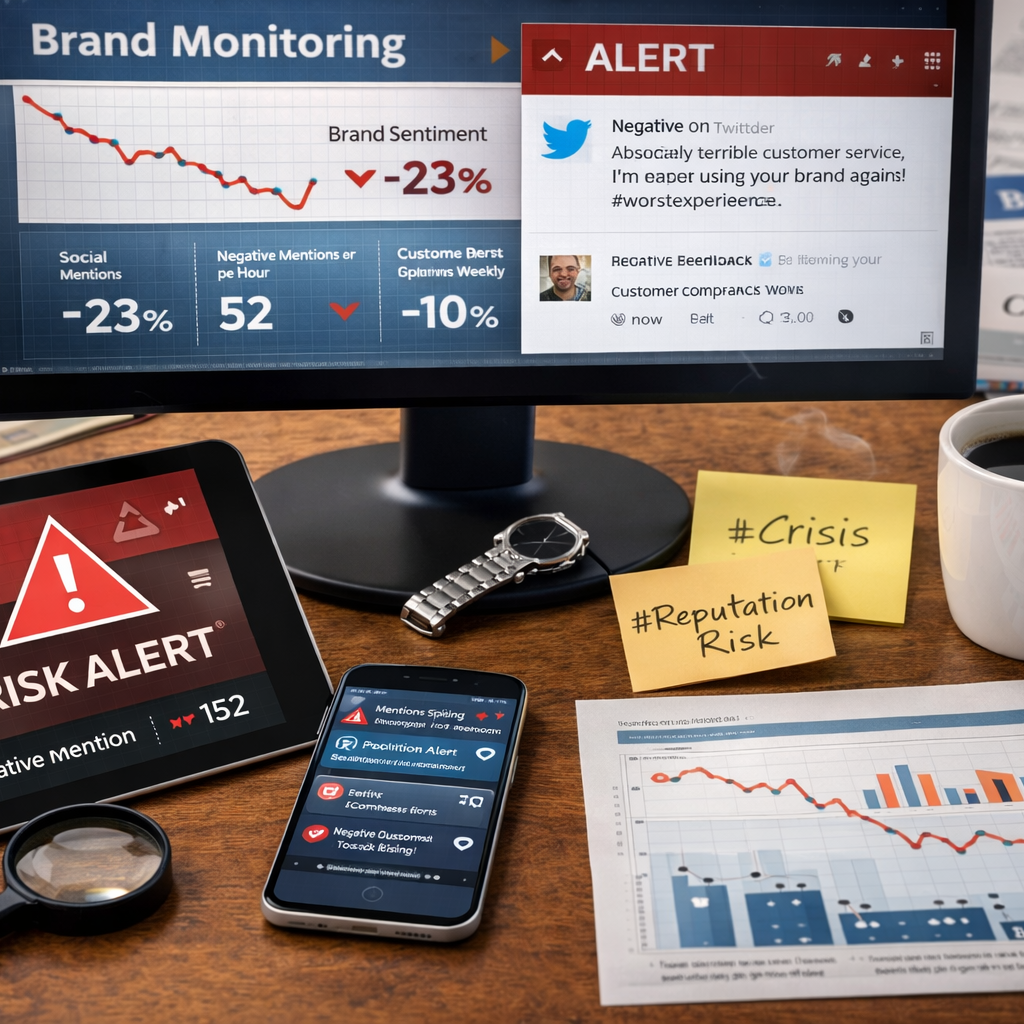
Why Brand Monitoring Is Now a Real-Time Risk Management Function
Key Takeaways
-
Brand monitoring has shifted from passive tracking to an active, real-time risk management function that directly protects reputation, revenue, and trust.
-
You need structured systems, clear escalation paths, and continuous monitoring to respond to brand risks before they escalate.
Understanding The Shift Toward Real-Time Brand Monitoring
Brand monitoring is no longer a background activity. You are operating in an environment where information moves instantly, and public perception can change without warning. This shift forces you to treat brand monitoring as a real-time risk management function rather than a reporting task.
You are not only observing conversations. You are identifying potential threats, assessing impact, and acting quickly. This makes brand monitoring a critical part of your overall business strategy.
Why Brand Monitoring Now Functions As Risk Management
Brand monitoring today directly connects to risk exposure. Every mention, review, or discussion can influence how your brand is perceived.
You are dealing with risks such as:
-
Reputation damage from negative sentiment
-
Misinformation spreading quickly
-
Customer dissatisfaction becoming public
-
Competitor positioning affecting your brand
When you approach brand monitoring as risk management, you shift from reacting late to acting early. This reduces long-term damage and protects your positioning in the market.
What Makes Real-Time Brand Monitoring Different
How Does Real-Time Monitoring Change Your Response Strategy?
Real-time monitoring changes how you respond to issues. Instead of reviewing reports after the fact, you act while the situation is still developing.
You are able to:
-
Detect issues at the earliest stage
-
Respond before narratives take shape
-
Prevent escalation into larger problems
This approach requires speed, clarity, and decision-making authority within your team.
Why Is Speed Critical In Brand Risk Management?
Speed determines whether an issue becomes a risk or remains manageable. Delayed responses allow negative perception to spread and become harder to control.
You must build systems that allow you to act quickly without confusion. This includes predefined actions and clear communication lines.
Core Components Of A Real-Time Brand Monitoring System
To treat brand monitoring as a risk management function, you need a structured system. This system should not rely on manual observation alone.
What Tools Support Effective Brand Monitoring?
You need tools that capture brand mentions across multiple channels. These tools should provide alerts and categorize sentiment.
Key capabilities include:
-
Real-time alerts for brand mentions
-
Sentiment tracking and trend analysis
-
Channel-wide monitoring across platforms
-
Data filtering for relevance and priority
How Do You Define Risk Signals?
Not every mention is a risk. You must define what signals indicate potential issues.
Examples of risk signals include:
-
Sudden increase in negative mentions
-
Repeated complaints on similar topics
-
Influential voices discussing your brand negatively
-
Emerging misinformation or confusion
Clear definitions help your team act consistently and avoid overreaction.
Building A Structured Response Framework
A real-time system only works if your response is organized. Without structure, speed leads to inconsistency.
What Should Your Escalation Process Look Like?
You need a clear escalation path based on risk level. This ensures that the right people respond at the right time.
Your escalation framework should include:
-
Defined risk levels
-
Assigned decision-makers for each level
-
Pre-approved response guidelines
-
Internal communication flow
How Do You Maintain Consistency In Responses?
Consistency protects your brand voice and credibility. Even under pressure, your responses must align with your brand identity.
You can achieve this by:
-
Creating response templates for common scenarios
-
Training teams on tone and messaging
-
Reviewing responses regularly for alignment
Integrating Brand Monitoring Into Business Strategy
Brand monitoring should not operate in isolation. It must connect with broader business functions.
How Does Brand Monitoring Support Decision Making?
You can use insights from brand monitoring to guide decisions across departments.
These insights help you:
-
Improve customer experience
-
Adjust messaging strategies
-
Identify product or service gaps
-
Refine positioning in the market
Why Should Leadership Be Involved?
Leadership involvement ensures that brand risks are taken seriously. It also allows faster decisions during critical situations.
You should ensure that key stakeholders have visibility into brand monitoring insights and risk alerts.
Common Gaps In Brand Monitoring Strategies
Many organizations attempt brand monitoring but fail to manage risk effectively. This usually happens due to gaps in execution.
Where Do Most Brand Monitoring Systems Fail?
Common failures include:
-
Monitoring without clear action plans
-
Delayed response due to unclear ownership
-
Lack of defined risk thresholds
-
Over-reliance on reports instead of alerts
Why Is Passive Monitoring No Longer Enough?
Passive monitoring only tells you what already happened. By the time you act, the impact may already be significant.
You need active monitoring that drives immediate action. This is the core difference between observation and risk management.
Aligning Teams Around Brand Risk Management
Brand monitoring requires coordination across teams. You cannot manage risk effectively in silos.
How Do You Ensure Cross-Functional Alignment?
You need shared goals and clear communication between teams such as marketing, customer support, and leadership.
Ways to align teams include:
-
Shared dashboards for visibility
-
Regular updates on brand sentiment
-
Defined roles during incidents
What Role Does Training Play?
Training ensures that everyone understands how to respond to brand risks. Without training, responses become inconsistent and slow.
You should focus on:
-
Scenario-based training
-
Communication protocols
-
Decision-making under pressure
Measuring The Effectiveness Of Brand Monitoring
To improve your system, you need to measure its effectiveness. This helps you identify gaps and refine your approach.
What Metrics Indicate Strong Brand Monitoring?
You should track metrics that reflect speed and impact.
Key metrics include:
-
Response time to brand mentions
-
Change in sentiment after response
-
Frequency of escalated issues
-
Resolution effectiveness
How Do You Continuously Improve Your System?
Continuous improvement requires regular review and adjustment.
You should:
-
Analyze past incidents
-
Update response frameworks
-
Refine risk definitions
-
Improve tool usage and integration
The Future Direction Of Brand Monitoring
Brand monitoring will continue to evolve as communication channels expand. You need to stay prepared for increasing complexity.
How Will Brand Monitoring Continue To Evolve?
You can expect:
-
Greater reliance on automation
-
More advanced sentiment analysis
-
Faster detection of emerging risks
Why Must You Stay Adaptive?
Static systems cannot handle dynamic environments. You must continuously adapt your monitoring and response strategies to remain effective.
Strengthening Your Brand Through Real-Time Risk Awareness
Treating brand monitoring as a real-time risk management function allows you to protect and strengthen your brand at the same time. You are not only preventing damage but also building trust through timely and thoughtful responses.
You need to move beyond passive observation and build a system that detects, evaluates, and responds to risks immediately. This requires the right tools, structured processes, and aligned teams.
Take action now by strengthening your brand monitoring approach and turning it into a core risk management function. Sign up on Credkeeper to build a more resilient and responsive brand presence.