
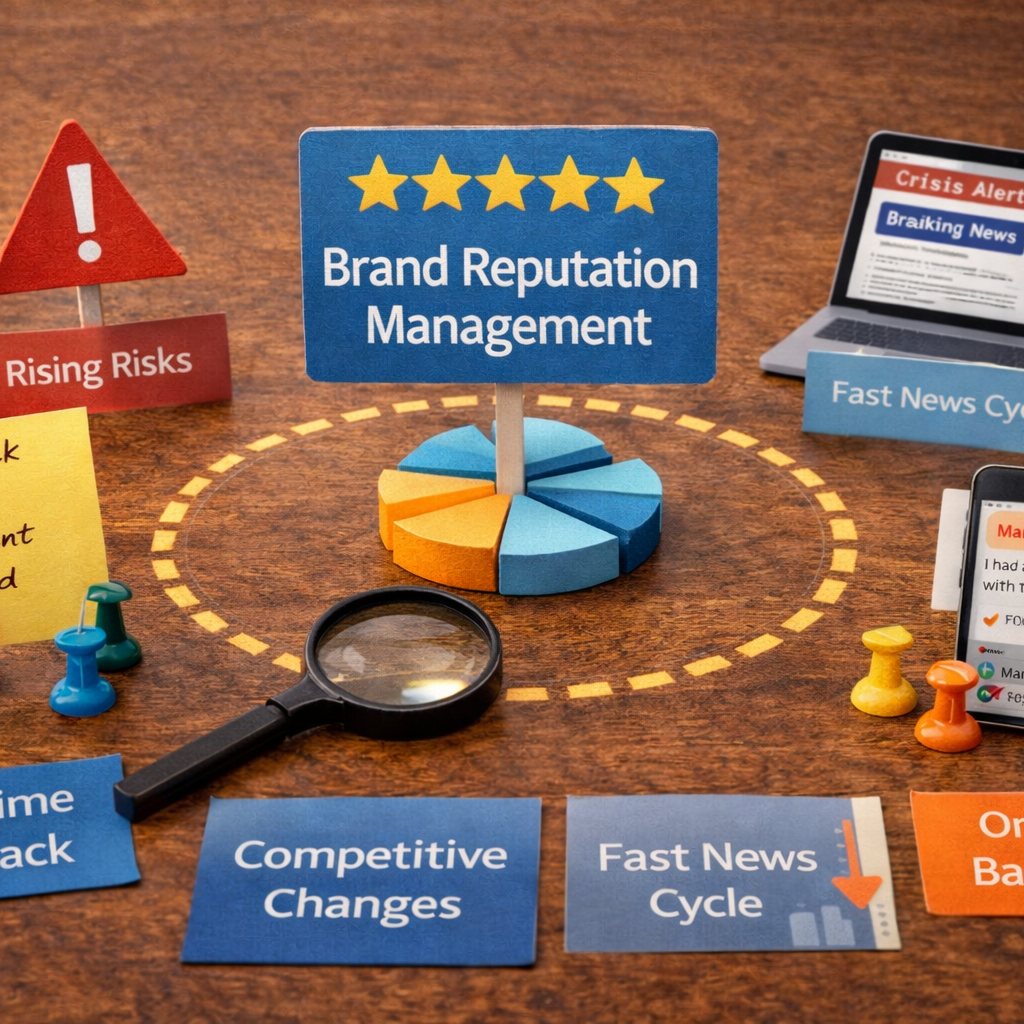
5 Reasons Brand Reputation Management Is Now a Daily Operational Priority
Key Takeaways
-
Brand reputation management now requires daily attention because digital signals, customer feedback, and public perception change constantly.
-
You must treat brand reputation as an operational function, not a reactive task, to protect trust and sustain long-term growth.
Understanding Why Brand Reputation Management Has Become Operational
Brand reputation management is no longer a periodic activity. It is a continuous responsibility. You are not only managing perception. You are managing risk, trust, and long-term positioning at the same time.
Every interaction, message, and response contributes to how your brand is seen. This means your reputation is shaped daily. If you are not actively guiding it, external forces will do it for you.
1. Constant Digital Visibility Has Changed Brand Reputation Management
How Does Always-On Visibility Affect Brand Reputation?
You operate in an environment where your brand is always visible. Customers, stakeholders, and audiences can interact with your brand at any moment.
This creates a few critical realities:
-
Feedback appears instantly and publicly
-
Conversations spread across multiple platforms
-
Small issues can gain attention quickly
You must monitor and respond continuously. Waiting is no longer an option.
What Happens When You Ignore Daily Signals?
When you delay action, small concerns can grow into larger perception issues. You lose control of the narrative. You also risk being seen as unresponsive.
Daily brand reputation management helps you:
-
Identify early warning signs
-
Respond before issues escalate
-
Maintain consistent messaging
2. Customer Expectations Demand Immediate Response
Why Do Customers Expect Fast Engagement?
Customers expect brands to listen and respond quickly. This expectation applies across all touchpoints.
You are judged not only by what you offer, but by how you respond.
How Should You Adapt Your Brand Reputation Strategy?
You need structured response systems. These systems should allow you to:
-
Track incoming feedback in real time
-
Prioritize responses based on impact
-
Maintain a consistent tone across teams
Your brand reputation management process must be aligned with customer experience operations.
3. Brand Reputation Directly Impacts Business Decisions
How Does Reputation Influence Decision-Making?
Brand reputation is no longer separate from operations. It directly affects how decisions are made across your organization.
You rely on reputation signals to:
-
Adjust messaging strategies
-
Improve product or service experience
-
Refine communication frameworks
What Should You Measure Daily?
To manage reputation effectively, you should track:
-
Sentiment trends n- Volume of feedback
-
Response effectiveness
These metrics help you make informed decisions. They also allow you to align your strategy with real-time insights.
4. Risk Management Now Depends On Brand Reputation Monitoring
Why Is Brand Reputation A Risk Function?
Reputation risk is now one of the most important operational risks. It can affect trust, engagement, and long-term credibility.
You must treat brand reputation monitoring as a protective layer.
How Can You Reduce Reputation Risk?
You should implement clear processes:
-
Continuous monitoring across channels
-
Defined escalation paths
-
Consistent messaging guidelines
This approach ensures you are prepared to respond quickly and effectively.
5. Consistency Across Channels Requires Daily Oversight
Why Is Consistency Critical In Brand Reputation Management?
Your brand exists across many platforms. Each interaction shapes perception. Inconsistency weakens trust.
You must ensure alignment across:
-
Messaging
-
Tone of voice
-
Customer interactions
How Do You Maintain Consistency At Scale?
You need operational systems that support consistency:
-
Centralized brand guidelines
-
Team alignment processes
-
Regular monitoring and audits
Daily oversight helps you identify gaps before they affect perception.
Building A Daily Brand Reputation Management System
You cannot rely on manual effort alone. You need structured systems that support ongoing management.
What Should Your Daily Workflow Include?
A strong workflow should cover:
-
Monitoring brand mentions and conversations
-
Reviewing sentiment and feedback patterns
-
Responding to key interactions
-
Updating internal teams on emerging issues
How Do You Align Teams Around Reputation?
Reputation management is not limited to one team. It requires coordination across functions.
You should ensure:
-
Clear ownership of responsibilities
-
Shared access to insights
-
Consistent training on brand voice
Integrating Brand Reputation Into Core Operations
To make brand reputation management effective, you must embed it into daily operations.
What Does Integration Look Like?
Integration means:
-
Including reputation metrics in performance reviews
-
Aligning communication strategies with real-time feedback
-
Using insights to guide decision-making
How Do You Maintain Long-Term Alignment?
You should establish processes that reinforce consistency:
-
Regular internal reviews
-
Continuous refinement of messaging
-
Ongoing monitoring of brand perception
Strengthening Brand Trust Through Daily Actions
Trust is built through consistent actions. Every response and interaction contributes to it.
How Do Daily Actions Build Trust?
You build trust when you:
-
Respond clearly and consistently
-
Address concerns directly
-
Maintain transparency in communication
What Should You Avoid?
Avoid inconsistent responses, delayed communication, and unclear messaging. These weaken trust over time.
Reinforcing Brand Authority Through Reputation Management
Brand authority is not created through messaging alone. It is reinforced through how you manage perception daily.
How Does Reputation Support Authority?
A well-managed reputation shows that your brand is reliable and consistent. It strengthens your position in the market.
What Role Does Consistency Play?
Consistency ensures that your audience knows what to expect. It reduces uncertainty and builds confidence in your brand.
Moving From Reactive To Proactive Brand Reputation Management
Many organizations still react to issues after they appear. This approach is no longer effective.
Why Should You Be Proactive?
A proactive approach allows you to:
-
Identify risks early
-
Shape the narrative before it spreads
-
Maintain control over brand perception
What Does A Proactive System Include?
-
Continuous monitoring tools
-
Clear response frameworks
-
Regular analysis of feedback trends
Sustaining Long-Term Brand Reputation Strength
Daily management creates long-term strength. It allows you to adapt while maintaining consistency.
How Do You Sustain Strong Brand Reputation?
You should focus on:
-
Ongoing monitoring and analysis
-
Continuous improvement of processes
-
Alignment between strategy and execution
What Is The Long-Term Impact?
A strong reputation supports growth, trust, and resilience. It helps your brand navigate change without losing credibility.
Strengthening Your Brand Reputation Strategy Going Forward
You must treat brand reputation management as a core operational priority. It requires daily attention, structured systems, and cross-team alignment.
By embedding reputation into your operations, you create a system that protects trust and supports growth.
Take action by building a structured approach to brand reputation management and ensuring your team is aligned around it. To strengthen your brand credibility and maintain consistent trust signals, sign up on Credkeeper and start managing your reputation with a clear and disciplined system.