
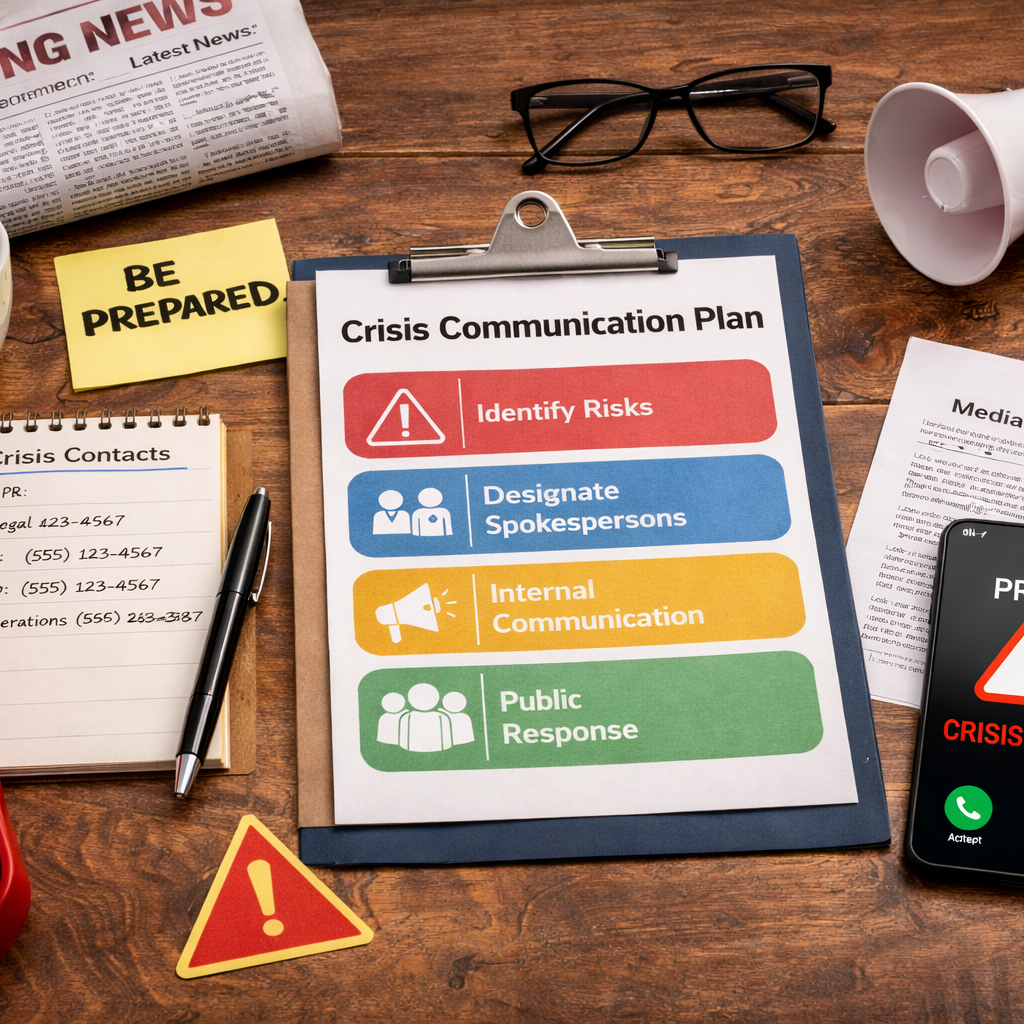
What Crisis Communication Plans Should Include Before Issues Escalate Publicly
Key Takeaways
-
A strong crisis communication plan prepares you to respond quickly, clearly, and consistently before issues gain public attention.
-
Effective crisis communication depends on predefined roles, clear messaging frameworks, and ongoing monitoring systems.
Why Crisis Communication Planning Matters More Than You Think
You operate in an environment where information moves fast. Issues that once stayed internal can now become public within minutes. Without a clear crisis communication plan, your response becomes reactive, inconsistent, and risky.
A structured plan gives you control. It ensures that when pressure rises, your communication remains steady, aligned, and credible. Instead of guessing what to say, you rely on a system that has already been defined.
What Should A Crisis Communication Plan Include From The Start?
Your plan should not begin at the moment of crisis. It must exist before anything happens. This means building a framework that answers key questions in advance.
At a minimum, your plan should include:
-
Defined communication roles and responsibilities
-
Pre-approved messaging guidelines
-
Internal and external communication protocols
-
Monitoring and escalation systems
-
Approval workflows for public statements
Each of these elements reduces delay and confusion when time matters most.
How Do You Define Crisis Communication Roles Clearly?
Unclear roles lead to slow decisions. During a crisis, delay can worsen the situation. You need a clear structure that defines who does what.
Your crisis communication team should include:
-
A primary spokesperson
-
A backup spokesperson
-
A communications lead responsible for message coordination
-
Legal or compliance oversight when needed
-
Internal communication leads for employees
Each role should have clear authority. This avoids multiple voices speaking at once or conflicting statements reaching the public.
What Messaging Framework Should You Prepare In Advance?
You cannot predict every crisis, but you can prepare how you communicate. A messaging framework ensures consistency across all channels.
Your framework should focus on:
-
Clarity: Use simple and direct language
-
Transparency: Share what you know without overpromising
-
Accountability: Acknowledge responsibility when required
-
Reassurance: Show that you are taking action
Prepare adaptable message templates. These templates should allow you to respond quickly while maintaining alignment with your brand voice.
How Should Internal Communication Be Structured?
Your employees are part of your communication system. If they lack information, they may spread confusion.
You should create internal communication protocols that:
-
Provide timely updates to employees
-
Clarify what can and cannot be shared externally
-
Offer clear talking points for customer-facing teams
Consistency inside your organization leads to consistency outside.
What External Communication Channels Should You Prioritize?
You need to decide in advance where and how you will communicate publicly. Waiting to choose channels during a crisis creates delays.
Consider the following channels:
-
Official website updates
-
Social media platforms
-
Press statements or media responses
-
Direct communication with stakeholders
Each channel should have a defined purpose. This prevents duplication and ensures that your message remains consistent across platforms.
How Do You Build A Monitoring And Early Warning System?
Crisis communication starts before a crisis becomes visible. Monitoring helps you detect issues early.
You should track:
-
Brand mentions across digital platforms
-
Customer feedback trends
-
Internal reports of emerging issues
Early signals allow you to act before problems escalate. This gives you more control over the narrative.
What Should Escalation Protocols Look Like?
Not every issue is a crisis. However, some issues can quickly become one if not handled properly. You need a clear escalation process.
Your escalation protocol should define:
-
What triggers escalation
-
Who is notified at each stage
-
How quickly decisions must be made
This structure ensures that serious issues reach the right people without delay.
How Do You Ensure Message Approval Without Delays?
Approval processes often slow down communication. In a crisis, speed matters. You need a balance between accuracy and efficiency.
To achieve this, you should:
-
Pre-approve general messaging guidelines
-
Limit the number of decision-makers
-
Define fast-track approval processes for urgent updates
This allows you to respond quickly while maintaining control over messaging.
What Role Does Consistency Play In Crisis Communication?
Inconsistent messaging creates confusion. It also reduces trust. Your audience expects clear and aligned communication across all touchpoints.
To maintain consistency, you should:
-
Use a single source of truth for updates
-
Align all teams with the same messaging
-
Avoid speculation or unverified information
Consistency reinforces credibility, especially when scrutiny is high.
How Should You Prepare For Media Interaction?
Media attention can increase pressure. Without preparation, responses may appear unclear or defensive.
You should prepare by:
-
Training spokespersons for interviews
-
Defining key messages for media use
-
Anticipating difficult questions
Prepared communication reduces the risk of misinterpretation.
What Documentation Should Be Included In Your Plan?
A crisis communication plan should be easy to access and use. Documentation plays a critical role in execution.
Your plan should include:
-
Contact lists for key stakeholders
-
Predefined templates for statements
-
Step-by-step response procedures
Clear documentation ensures that anyone involved can act quickly and confidently.
How Do You Test Your Crisis Communication Plan Effectively?
A plan that is never tested may fail under pressure. Testing helps you identify gaps before they matter.
You should conduct:
-
Scenario-based simulations
-
Internal communication drills
-
Response time evaluations
Testing improves readiness and highlights areas for improvement.
What Role Does Leadership Play During A Crisis?
Leadership visibility matters. During a crisis, stakeholders look for direction and assurance.
Leaders should:
-
Support communication decisions
-
Stay aligned with messaging strategies
-
Communicate with clarity and confidence
Strong leadership reinforces trust during uncertain situations.
How Do You Maintain Trust During Ongoing Issues?
Trust is fragile during a crisis. Once lost, it is difficult to rebuild. Your communication approach should focus on maintaining credibility.
You can do this by:
-
Providing regular updates
-
Avoiding silence during critical moments
-
Being honest about uncertainties
Consistent and transparent communication helps maintain confidence.
What Should You Review After A Crisis Ends?
Every crisis provides insight. Your plan should include a review process to capture lessons learned.
You should evaluate:
-
What worked well
-
Where delays occurred
-
How communication was perceived
This review allows you to strengthen your plan for the future.
How Does A Proactive Crisis Communication Plan Strengthen Your Brand?
A proactive approach does more than manage risk. It strengthens your brand over time.
When you communicate effectively during difficult moments, you demonstrate reliability. This builds long-term trust with your audience.
Preparation also reduces uncertainty within your organization. Teams feel more confident when they know there is a clear plan in place.
Building Readiness Before Issues Escalate
Crisis communication is not about reacting. It is about preparation. The more structured your plan, the more controlled your response will be.
You should focus on clarity, speed, and alignment. These elements ensure that your communication supports your overall strategy.
If you want to strengthen your communication readiness and maintain trust under pressure, take the next step. Sign up on Credkeeper to organize your communication frameworks and ensure your plans remain structured, accessible, and ready to execute.