
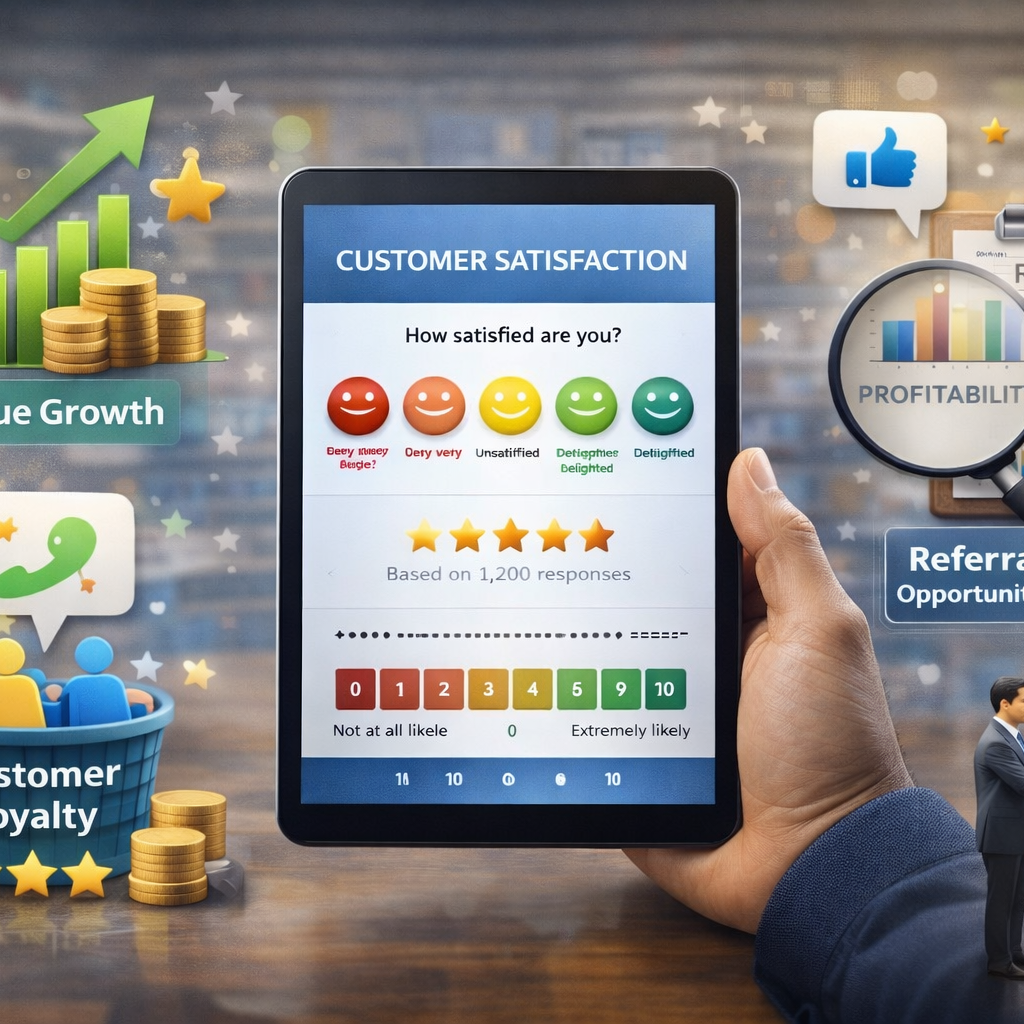
What Customer Satisfaction Scores Actually Reveal About Business Health
Key Takeaways
-
Customer satisfaction scores reveal patterns in customer experience, retention risk, and operational gaps, not just surface-level sentiment.
-
You should treat satisfaction metrics as directional signals that require context, segmentation, and behavioral analysis to reflect true business health.
Understanding What Customer Satisfaction Scores Really Measure
Customer satisfaction scores are often seen as a simple indicator of how happy your customers are. In reality, they reflect something deeper. They show how well your business aligns with customer expectations at specific moments.
You are not measuring loyalty directly. You are measuring perception at a point in time. This distinction matters because perception can shift quickly, while underlying business health changes more slowly.
When you interpret customer satisfaction scores, you should think of them as signals rather than conclusions. They help you identify where to look, not what to assume.
Why Customer Satisfaction Scores Matter For Business Health
Customer satisfaction scores connect directly to several core areas of your business. These include retention, brand perception, and operational consistency.
A strong score often suggests that your experience meets expectations. A weak score signals friction, confusion, or unmet needs.
However, the real value comes from how you use these scores. You should connect them to broader outcomes such as:
-
Customer retention trends
-
Repeat purchase behavior
-
Support interaction patterns
-
Product or service usage consistency
When you align satisfaction data with these areas, you begin to see how customer experience affects business performance.
What Do Customer Satisfaction Scores Actually Reveal?
1. Where Customer Experience Breaks Down
Customer satisfaction scores help you identify where friction exists in your journey.
Low scores rarely happen randomly. They tend to cluster around specific touchpoints. These may include onboarding, support interactions, or post-purchase experiences.
You should analyze where scores drop and compare those points with customer behavior. This allows you to uncover hidden operational issues.
2. How Expectations Compare To Delivery
Customer satisfaction is shaped by expectations. If your experience matches or exceeds expectations, scores improve. If not, scores decline.
You should evaluate whether your messaging, positioning, and promises align with what customers actually receive.
Misalignment often leads to dissatisfaction even if the product itself performs well.
3. Which Customer Segments Are At Risk
Not all customers experience your business the same way. Satisfaction scores often vary across segments.
You should break down your data by segment, such as:
-
New vs returning customers
-
High-value vs low-value customers
-
Different acquisition channels
This helps you identify which groups are more likely to churn or disengage.
4. The Strength Of Your Operational Consistency
Consistent scores across touchpoints suggest stable processes. Large variations indicate inconsistency.
You should monitor how scores change across channels and interactions. This reveals whether your systems and teams deliver a uniform experience.
5. Early Signals Of Retention Issues
Customer satisfaction often declines before customers leave.
You should treat drops in satisfaction as early warning signs. These signals allow you to act before churn occurs.
Tracking trends over time is more useful than looking at single data points.
How Should You Interpret Customer Satisfaction Scores?
Should You Trust A Single Score?
You should avoid relying on a single score as a complete measure of business health.
Customer satisfaction is influenced by many factors. A single number cannot capture the full experience.
Instead, you should combine satisfaction scores with other metrics such as engagement and retention.
How Do Trends Matter More Than Snapshots?
Trends provide a clearer picture than isolated data points.
You should monitor how scores change over time. This helps you understand whether your experience is improving or declining.
Consistent movement in one direction often signals underlying changes in your business.
Why Context Changes Everything?
Context determines how you interpret satisfaction scores.
You should consider factors such as:
-
Customer expectations at each stage
-
Channel-specific experiences
-
Type of interaction being measured
Without context, scores can lead to incorrect conclusions.
How Customer Satisfaction Scores Connect To Other Metrics
Customer satisfaction does not exist in isolation. It works best when combined with other signals.
You should integrate satisfaction data with:
-
Customer retention rates
-
Customer lifetime value indicators
-
Product usage behavior
-
Support ticket patterns
This creates a more complete view of business health.
When these metrics align, your insights become stronger. When they conflict, you uncover deeper issues that need investigation.
What Are The Limitations Of Customer Satisfaction Scores?
Why Satisfaction Does Not Equal Loyalty?
A satisfied customer is not always a loyal customer.
You may have customers who report positive experiences but still leave due to better alternatives or changing needs.
You should avoid assuming that high satisfaction guarantees long-term retention.
How Bias Affects Customer Satisfaction Scores?
Customer feedback is often influenced by bias.
Some customers are more likely to respond than others. Negative experiences can also drive higher response rates.
You should account for these biases when analyzing your data.
Why Timing Influences Responses?
The timing of your surveys affects the results.
You should consider when customers are asked for feedback. Immediate responses may reflect emotion, while delayed responses may reflect overall experience.
Understanding this difference helps you interpret results more accurately.
How Can You Improve Customer Satisfaction Effectively?
Where Should You Focus First?
You should prioritize areas with the largest impact on customer experience.
Focus on touchpoints where dissatisfaction is highest and where improvements can create meaningful change.
How Do You Close The Feedback Loop?
Collecting feedback is not enough. You need to act on it.
You should:
-
Analyze feedback regularly
-
Identify recurring themes
-
Implement changes based on insights
-
Communicate improvements internally
This process ensures that feedback leads to action.
Why Continuous Monitoring Matters?
Customer expectations change over time.
You should continuously track satisfaction scores and adjust your strategies accordingly.
Ongoing monitoring helps you stay aligned with customer needs.
How Do Customer Satisfaction Scores Support Strategic Decisions?
Customer satisfaction scores can guide decision-making across your organization.
You should use them to:
-
Identify areas for investment
-
Prioritize product or service improvements
-
Align teams around customer experience goals
-
Evaluate the impact of changes over time
When used correctly, satisfaction data becomes a strategic asset rather than a simple report.
How Can You Turn Satisfaction Data Into Actionable Insights?
What Should You Look For In The Data?
You should focus on patterns rather than isolated responses.
Look for recurring issues, consistent feedback themes, and correlations with customer behavior.
How Do You Align Teams Around Insights?
Customer satisfaction impacts multiple teams.
You should share insights across departments such as product, support, and marketing.
This alignment ensures that improvements are coordinated and effective.
Why Prioritization Is Critical?
Not all feedback requires immediate action.
You should prioritize changes based on impact and feasibility.
This helps you allocate resources effectively and avoid unnecessary effort.
Strengthening Business Health Through Customer Insight
Customer satisfaction scores are valuable when used with intention. They provide insight into customer experience, operational performance, and potential risks.
You should move beyond viewing them as standalone metrics. Instead, treat them as part of a broader system of customer intelligence.
When you combine satisfaction data with behavioral insights and operational analysis, you gain a clearer understanding of your business health.
To turn insights into impact, you need a structured approach to managing and acting on customer data. Sign up on Credkeeper to organize your customer insights, track satisfaction trends, and align your strategies with real customer behavior.